If a part exists physically, it can be digitised, rebuilt and reproduced. That is the core of what we do with our 3D scanning services.
Van Builder provides professional 3D scanning, reverse engineering and custom fabrication services across Australia. We work from real-world objects, not drawings. This helps when a component is broken, discontinued, custom, or simply hard to measure accurately.
You bring the part, and we turn it into a usable digital model, a manufacturable file, or a finished replacement.
This service is for people who cannot simply order a replacement. If you are holding a part that no longer exists on a shelf, or you need a one-off solution that actually fits, this page is for you.
We also use 3D scanning to support new part development and prototyping, particularly where new components need to fit accurately with existing vehicles, cabinetry, machinery, or structures.
For enquiries, please contact Van Builder in Melbourne on 0468 633 577 or get in touch online.
3D Scanning and Fabrication: From Physical Part to Finished Component
Most projects follow a straightforward, proven workflow.
| Phase | Process | Delivery |
|---|---|---|
| 1. Digital Capture | High-accuracy 3D scanning of the physical object (on-site or workshop). | Detailed point-cloud data. |
| 2. Reverse Engineering | Converting scan data into a clean, editable, and watertight CAD model. | Production-ready STEP or STL files. |
| 3. Custom Fabrication | Manufacturing using CNC routing, 3D printing, or traditional machining. | A physical, finished component ready for installation or use. |
First, the physical part is scanned in detail. Second, the scan data is converted into a clean, editable CAD model. Third, the part is manufactured, or the production-ready file is supplied for your own fabricator.
Scanning early removes guesswork. It also avoids measurement errors that compound later and waste time during test fits. Even if the original is worn, cracked, incomplete, or previously modified, the goal stays the same. Produce a replacement that fits and functions as intended.
Where required, we can also modify the design after reverse engineering. That includes adding clearance, adjusting mounting points, strengthening weak areas, simplifying geometry for manufacture, or updating a part so it suits a new use.
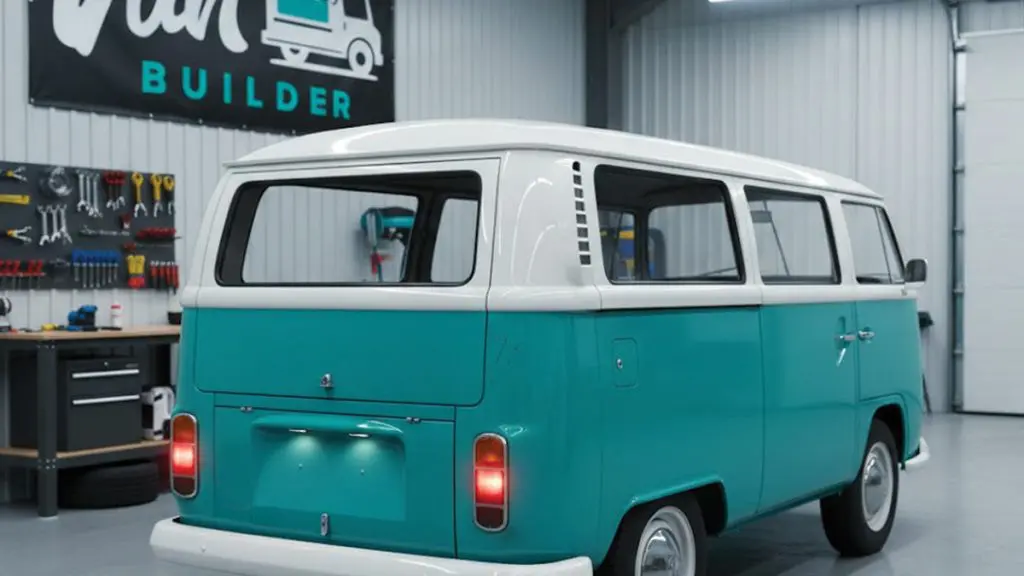
Professional 3D Scanning On Site or In Workshop
We use a professional wireless 3D scanner designed for high-accuracy industrial work, including the Artec Leo platform. It captures complex geometry, curved surfaces and fine detail with accuracy down to 0.1 mm.
Because the scanner is fully portable, many items can be scanned on site. This suits large parts, fixed installations, and components that are difficult to transport. Workshop scanning is also available for smaller parts, or where controlled lighting and access improves capture quality.
Typical items we scan include mechanical parts, brackets, housings, fittings, covers, panels, cabinetry components, moulded shapes and assemblies where multiple features need to line up. The output is a high-resolution digital model that reflects the real object, not an estimate.
Reverse Engineering for Real-World Applications
Reverse engineering is not about copying blindly. It is about understanding how a part fits, loads and interacts with surrounding components.
Once scanned, the part is rebuilt as a clean CAD model. From there, it can be corrected, strengthened, simplified, or modified as required. This approach is ideal when original drawings never existed, the manufacturer no longer supports the part, or tolerances actually matter.
You end up with a usable digital asset that can be reused later. That matters for spares, repeat builds, short runs, and future repairs.
3D Scanning for New Part Development and Prototyping
3D scanning is not only used to replace existing parts. It is also a practical starting point for developing new components that need to interface accurately with what is already there.
In many projects, the surrounding geometry already exists. That might be a van body, cabinetry, machinery housing, or structural frame. By scanning those reference surfaces first, new parts can be designed to fit correctly from the outset, rather than relying on assumptions or manual measurements.
This approach is commonly used during prototyping. Initial designs can be scanned, refined in CAD, adjusted for clearance or strength, and tested before committing to production. Changes are controlled, repeatable, and based on real geometry, not estimates.
For ongoing builds, scanning also allows new parts to be standardised. Once the digital model is finalised, it can be reused for consistent production runs, future revisions, or integration into larger assemblies.
Why 3D Scanning Beats Manual Measuring
Manual measurement works for simple shapes. It struggles with complex curves, worn edges and compound surfaces. Important features are often missed until a test fit fails.
3D scanning captures all geometry at once, including subtle curves and blended surfaces that are hard to measure consistently. That accuracy flows through the entire process. It reduces rework, shortens turnaround time and lowers the risk of incorrect parts.
For trades, designers, engineers and fabricators, this means fewer surprises and better outcomes. It also means you can keep a digital
The Power of Digital Mirroring: Restoring Symmetry
One of the most common problems in restoration is having a part that is missing or destroyed on one side, but perfectly fine on the other.
Traditional fabrication would require hours of manual templating and “eyeballing” to get it right. With our 3D scanning service, we use a process called Digital Mirroring to ensure a perfect fit every time.
How it works:
- Scan the “Good” Side: We capture the high-resolution geometry of the surviving part
(e.g., a left-hand bumper end cap or a driver’s side step). - Flip the Data: Using our CAD software, we create a perfect 180-degree mirror image of
that part. - Manufacture: We produce the new “opposite” part. It will match the original factory
contours, mounting points, and aesthetic exactly.
Ideal for: Bumper corners, wing mirror housings, light surrounds, door steps, and asymmetrical
interior trim.
Built for Practical Projects
This service is not aimed at concept visuals or marketing renders. It is built for people solving physical problems in the real world.
The focus stays on accuracy, fit and repeatability. If you need to replace something that already exists, scanning is often the safest starting point. If you need to improve a part, reverse engineering gives you control over the design instead of patching problems on the bench.
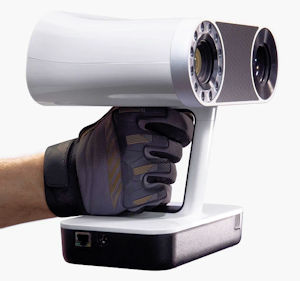
Why we use the Artec Leo
We didn’t pick the Artec Leo because it looks good; we picked it because it’s the only scanner that handles the reality of a custom workshop. At around $50,000 for the unit alone, it’s a serious investment in accuracy that hobbyist tools simply can’t match.
What this means for your project:
- No Cables, No Clutter: Because it’s wireless with an onboard screen, we can climb into tight engine bays or under-bed storage areas where a tethered scanner just wouldn’t reach.
- Scan what you see: We see the part being built on the screen in real-time. This means we don’t leave the site until we know every mounting hole and critical edge has been captured.
- 1mm Accuracy: It’s the difference between a part that “sort of fits” and one that snaps into place like a factory component.
- Industrial Speed: We capture millions of points per second. This turns a day of manual measuring into a 15-minute scan, getting your project into the CAD stage faster.
Thank you for considering Van Builder for your 3D Scan & Fabrication Project.
Frequently Asked Questions…
Most solid objects can be scanned, from small mechanical components to large assemblies. Size is rarely the limiting factor. Access to key surfaces matters more than overall dimensions, especially around mounting points and hidden faces. If a feature is hard to reach, we can often reposition the part or plan the scan to capture it properly. No. This service is built for parts with no existing documentation. The physical object becomes the reference, and we rebuild it into a clean CAD model that you can actually use. If you do have sketches or dimensions, they can still help confirm critical features, but they are not required. Typical accuracy is up to 0.1 mm, depending on the object, surface finish and scanning conditions. Fit-critical features can be checked and rebuilt carefully in CAD, rather than relying on raw scan data alone. The goal is a model that matches how the part needs to function, not just how it looks. Yes. On-site scanning is available and is often preferred for large, fixed, or difficult-to-transport items. It can also suit situations where alignment to surrounding structures matters, such as installed brackets, cabinetry interfaces, or equipment housings. If site access is limited, we will plan the scan approach so we capture the required faces. After scanning, the data is processed and converted into a clean CAD model. From there, the model can be corrected, strengthened or modified to suit your application. Depending on the job, we can supply the file for your fabricator, or move into manufacturing using a suitable method such as machining, CNC routing, or 3D printing. No. While many jobs start as one-off replacements, the CAD file allows repeat production later. That helps when you want spares, a short run, or a consistent part for ongoing builds. It also means you can update the design over time without rescanning the original each time you need another.
What types of parts can be scanned?
Do you need original drawings or CAD files?
How accurate is the scanning process?
Can parts be scanned on site?
What happens after the scan is complete?
Is this suitable for one-off parts only?